Intro
The 3 Bucket Strategy is simply a process to use in order to optimize tax benefits from your investment dollars. Please note, this method is intended only for funds being put in the market. Funds being directed towards alternative investments (real estate, new business ventures, crowdfunding, etc.) would be handled separately. This strat first came to my attention through The Money Guy Show, which I encourage any Savvy Solo (at any financial status) to tune in. To answer your question, no they didn’t pay me to say that. 😂
I personally found this method to be insightful because it can be easy to overfund one bucket, when your personal future goals and current situation might encourage a bigger allocation towards another bucket. This framework around investing puts a priority on tax benefits, while emphasizing for flexibility along the way.
Let’s dive in!
Disclaimer: I am not a CPA, CFP, CFA, or certified financial representative in any fashion. This post is intended for informative and entertainment purposes only. Your investment decisions are your own.
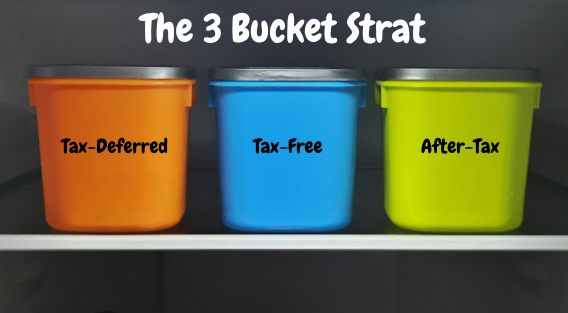
The 3 Buckets
Tax-Deferred Bucket: This bucket includes any investment vehicle that allows for the tax break now so that you pay income taxes later on down the line during distributions. This will include your 401k, 403b, 457 plans, traditional IRAs, etc.
Tax-Free Bucket: This bucket includes the investment vehicles that the investor pays income taxes on now and allows for tax-free growth and distributions later on down the line. This will include any Roth account (Roth 401k, Roth IRA, etc.) but also Health Savings Accounts (HSAs).
After-Tax Bucket: This bucket includes investments that are not tax-incentivized but can be accessed at any point without penalty. Essentially, we are referring to a taxable brokerage account here. The investor pays income taxes on the funds now and then pays capital gains tax on the growth down the line. Many people have access to an after-tax retirement account, but these should really only be utilized when performing a Mega Backdoor Roth conversion (which we’ll address in more detail in the future).
Why do I need all 3?
The short answer is that having funds invested in all 3 buckets allows for tax incentives now and gives yourself options for tax strategies in the future. Having funds in the after-tax bucket will allow for flexibility along the way and will assist with retiring early should an investor choose to make that decision in the future. Allocating funds towards all 3 will allow for more lifestyle options, and in turn, allow for a happier retirement.
Think about it like this… Someone who only invests in the tax-deferred bucket is getting all the tax benefits right now. That means in retirement, all of their income is going to be hit with income taxes during distributions. Nobody knows what the future holds, but chances are likely that the income tax brackets are going to be either the same or worse than they are right now. Essentially, you are likely putting a rougher tax burden on your future self than you could be dealing with right now.
_____
So tax-free bucket all day, right? Ehhh… not exactly. Someone who figures out a way to have 100% of their future income in Roth accounts experiences different difficulties. First off, without any taxable income, you miss out on future tax deductions. This means you won’t get the option of deductions from certain medical expenses, tax-loss harvesting techniques, and/or charitable donations.
The majority of people are in a higher tax bracket during their working years than during retirement. This opportunity cost is prevalent, since it might mean you are paying more taxes overall. There is also the potential for legislative changes on Roth accounts in the future. If that were to happen, chances are that current Roth funds would be grandfathered into what was promised, but there really are no guarantees. Not to mention, Roth funds can’t be touched until 59-1/2 (with the exception of contributions on a Roth IRA), so this leads to a lack of flexibility.
_____
Alright, so we want to go full freedom ahead with the after-tax bucket, right? This isn’t the best strategy either. Sure, the flexibility means no penalty for withdrawals at any time. But, if we are thinking about tax benefits, a taxable brokerage account is the worst of both worlds. You pay income tax on the funds now and pay capital gains tax along the way. Chances are likely that we’ll all be older than 60 at some point; hopefully much older than 60! So, with that in mind, we should all be taking advantage of tax benefits being offered; at least on some level.
The point here is that nobody knows what the future holds. By having investments in all 3 buckets, we can ensure that we’ll have more options down the line. Depending on the future tax situation, we’ll be prepared no matter the changes!
How should I consider allocation?
We all want to have our invested funds set 1/3rd in each right? Ehhhh… maybe… maybe not. It all depends on your goals, and where you are at on your financial journey. We are all dealt a different hand of cards and many of us have different end goals in mind. Having a firm grasp on where you currently are (knowing your net worth), and where you want to be (setting goals), is a great starting point.
From this point, it might be a good idea to sit down with a financial coach or a fiduciary CFP to come up with a plan that works best for you. There is no “one size fits all” approach to this, but here are a few things to think about:
Time Horizon: How far out from retirement are you? If it’s a few years away, you may want to consider beefing up your cash savings instead of investing. If it’s 4 decades away, this is where things get fun! Consider The Rule of 72 when factoring returns and be conservative!
Current Allocation: If all of your current investments are in the tax-deferred bucket right now, it might make sense to start prioritizing the other two buckets. This is depending on your situation of course and always get that company match no matter what! Never leave free money on the table!
Future Income Potential: For those younger investors who expect to earn significantly more during the wealth building phase, it may make sense to direct more funds towards Roth accounts at this point. For those currently at the peak of their earning potential (the highest tax bracket they expect to hit), it would make more sense to max out traditional retirement accounts before hitting one of the other buckets.
Potential Career Changes: How likely are you to stay in the same company/industry that you are currently in? What are the chances you’ll consider entrepreneurship in the next 5 years or so? None of us truly know what the future holds, but most of us have a good idea what we want the next few years to look like. Depending on the short to medium term goals, it might be wise to keep those funds invested in a flexible brokerage account. Maybe even in a HYSA instead of investing depending on the situation.
Want to FIRE?: Naturally one may think to allocate all investment funds towards the flexible after-tax bucket, but this is generally not optimal. Like I mentioned earlier, we should all plan to live well beyond 60, so it makes sense to get a tax break on investments for those years. Plus, utilizing a Mega Backdoor Roth conversion in a low-income year might prove to be the ideal tax route. Again, you’ll want to speak with a financial professional on that one.
Future Disposable Income: While you might be a Savvy Solo with some hefty disposal income right now, what do you picture the mid to long term future looking like? Does it involve kids, heavy travel, or other lifestyle change that will put a strain on that disposable income in the future? Sure, you might have bigger income potential in that future; but play with some numbers to see what your expenses will look like as well. It might make sense to prioritize the tax-free bucket now if disposable income is looking tight in the future (particularly the HSA).
Large Expenses: Keeping with the same thought process of thinking about future expenses; we all have the upcoming expenses that we know about and the ones we don’t. If you think you might want to buy a house in the future but don’t really have a date on it, utilize the after-tax bucket for now. Naturally, your emergency fund is for those unexpected expenses, but you might have a medical emergency that surpasses that amount. Medical costs are not getting any cheaper, and having a certain allocation of your investments going towards the flexible after-tax bucket could help you avoid medical debt in the worst-case scenario.
Conclusion
There are 3 things guaranteed in this world: death, taxes, and crazy Uncle Bill yelling about saving and investing! Other than that, nobody really knows what the future holds. For this reason, it’s important to keep our investments in all 3 buckets so we can make the best decisions for tax optimization in the future; while having that after-tax bucket flexibility along the way.
Don’t worry about getting the allocation % perfect, worry more about getting extra income invested into these buckets! 😁 Perfect is the enemy of good; don’t let analysis paralysis stop you from getting invested!
Stay classy Solos! ✌️
